Wednesday, October 29, 2014

DAY 41 - A Close Look at the Criminal Code

Today we had some fun looking at the Criminal Code and the issue of Homicide, as covered in ss.222+ in the Criminal Code (CC).


All parts of the CC are structured the same way.  In the section on Homicide it starts with a definition of Homicide: s. 222  " . . . a person causes, directly or indirectly, by any means, the death of a human being."

This rules out, say, killing any other animal as homicide - it's not killing a person.  Although unlawfully killing an animal is a crime as well, just covered in another section of the CC.

It goes on to say the Homicide can be either culpable or non-culpable - culpability is guilt or criminal responsibility.  And remember, that Actus Reus and Mens Rea must be present for culpability in this case.

For our purposes we'll look at Murder now, s. 229.  Again, it starts with a definition:
'Culpable homicide is murder when you mean to cause another's death or mean to cause bodily harm to another that you know is likely to cause the death.'  There are more stipulations, but that's the jist of it.

You can also commit Murder (see it's definition in s. 229 above) is you kill someone while committing another serious offense.  This is in s. 230, "Murder in the Commission of Offences."   The list of other offenses includes:
 - Treason
 - Piracy
- Hijacking
 - Escaping prison
 - Assaulting a peace officer (e.g. police)
- Sexual Assault
-  Robbery
- Breaking & Entering
- Arson

Then they classify murder as either 1st or 2nd degree and define each:
1st Degree =
- Planned and Deliberate
- Contract for killing
- Murder of a peace officer (e.g. jail guard, police, etc.)
- Hijacking, Sexual Assault, Kidnapping
- Murder during terrorist activity
- Using explosives in association with a criminal gang

2nd Degree = if it's not on the list above (but still murder) then it's 2nd Degree Murder.

When does the CC reduce homicide from murder to Manslaughter?
Culpable homicide that would otherwise be murder is manslaughter if the person committing it did so in the heat of passion or by sudden provocation.

Of course the CC then provides definitions for "heat of passion" and "sudden provocation".

Infanticide (s. 233) - defined as ' . . . a female causes the death of her newborn baby - if she is not fully recovered from the effects of giving birth and therefore her mind is disturbed.'


Then the CC outlines the Punishments:
1st Degree = Life in Prison (no parole for 25 years)
2nd Degree = Life in Prison (judges will decide on years until parole eligibility, often parole can be in 10 years)
Manslaughter = Life in Prison (judges have great leeway in deciding upon eligibility for parole)
Infanticide = maximum five years on jail

Counselling or Aiding in Suicide = maximum 14 years in jail

Now it's your turn - go to the online Criminal Code of Canada.

Draw a table and describe what is found in each of these sections of the CC as explained in class:
Sections 1, 6, 12, 13, 14, 16, 17, 19, 21, 22, 24, 26, 27, 29, 31, 34, 35, 43, 45, 46, 47, 57, 59, 63, 64, 64, 71, 72, 73, 76, 77, 83, 83.01 - 83.04, 85, 90, 119, 120, 131, 132, 144, 150.1, 151, 152, 153, 155, 159, 160, 163.1, 210, 212, 213, 222, 223, 229, 230, 231, 232, 233, 234, 235, 236, 237, 241, 247, 252, 253, 255, 264, 265, 266, 267, 268, 271, 273, 287, 322, 334, 343, 344, 348, 433, 434, 437, 445.1, 

Tuesday, October 21, 2014

Day 35 (Oct 22) Introduction to Criminal Law Lecture

Today we spent some time looking at the CBC News In Review story about the natural gas explosion at the Mexican resort in 2008 in which seven people died, five of whom were Canadian.  Although a modern country, Mexico has a problem with corruption and it would appear that this was part of the cause of the explosion - building codes were not followed and a ruptured gas line, a gas line that was not authorized on the blueprints of the resort, leaked gas in the space below the building and finally ignited causing a major explosion.  This law minute of the day is a good way to introduce the idea that the general public needs to be protected from crimes, even crimes that are "hidden in the ground."


We spent the rest of the class looking at my lecture on an Introduction to Criminal Law.

In case you missed it or in if you would like further clarification on your notes, here are some main points from the lecture:


The Law exists to:      Protect society & individuals
                                    Establish rules of conduct
                                    Keep the peace
                                    Punish offenders
                                    Protect rights and freedoms

What is a Crime?
Parliament decides what is a crime and it passes laws accordingly. 
A action that we consider a crime reflects societal values, e.g. Marijuana reform.   
Because different people have different values and beliefs, we establish that these  
FOUR CONDITIONS must exist in order for an action or omission to be considered a crime:
  1. The Action must harm other people or entities and the harm must be serious in nature and degree.
  2. The action violates the basic values of society.
  3. Using law to deal with the action must not violate the basic values of society.
  4. Criminal law can make a significant contribution to resolving the problem.
Also, these TWO ELEMENTS must exist for an action to be a criminal offense: actus reus & mens rea.  Because the Charter sec 11(d) says that a person is considered innocent until proven guilty the Crown attorney must prove both of these beyond a reasonable doubt.

ELEMENTS of a Crime
  1. Actus Reus:     wrongful action (committing the act of the crime)
  2. Mens Rea:       wrongful mind (intention to commit the crime), or that the offense is committed with i.) intent or knowledge  or ii.) recklessness.
    1. Intent or Knowledge: Intent is the true purpose of the action, or what a reasonable person would be thinking under the circumstances.
    2. General Intent: the person has no other criminal purpose in mind, e.g. assault or trespass (it has to be shown only that the person did apply force or was on someone else’s property) no need to prove mens rea.
    3. Knowledge: knowing certain facts can provide the necessary mens rea, e.g. using an expired credit card or someone else’s credit card.
    4. Recklessness: careless disregard for the possible results of an action.  People who act recklessly do not necessarily intend to cause harm, no matter.

Thursday, October 16, 2014

DAY 31 - Human Rights in Canada Wrap Up and Review for First Test

First you presented your Human Rights in Canada work.

Then we started test review as follows:

CLU3M    Intro to Law Test Review, the test will be on TUESDAY (changed from our initial date of Monday).

This test will encompass everything we have covered in the course so far.  No detailed information about the section on the history of law will be required on the test as this is being dealt with in your projects.  For study purposes in this or any other course, the most effective course of action is to review your class notes and textbook headings each day.  For final preparation for this test you should review the following topics in detail (Chapters 1-3):

1.  What is law?
2.  Why do we have laws?
3.  Explain the difference between rules and laws.
4.  Explain three main functions of what laws do for us.
5.  What is the “Rule of Law” and how does it function within society?  How does the rule of law ensure a just and fair system of law in Canada?
6.  Briefly, how are laws created in Canada (stages that a bill goes through).
7.  Using an example for each, explain the philosophies: positivism, realism, natural law.
8.  Hobbes said that without government, “Life would be cold, nasty, brutish, and short.”  Explain. 
9.  State whether or not you agree with this statement: People are basically bad so they need laws and punishments to control them.
10.      The American Declaration of Independence (1776) states that all men [people] “are endowed by their Creator with certain unalienable Rights . . . these are Life, Liberty, and the pursuit of Happiness.”  Why was such a statement so revolutionary?
11.      In simplest terms, what is the Canadian Charter of Rights and Freedoms?  What does it guarantee? (Main areas that it covers).
12.      Why is the Charter significant to Canada?
13.      What limitation on our rights and freedoms is stated in the Charter (Sec.1)?
14.      The Charter holds these fundamental freedoms:
·                    Conscience and religion
·                    Thought
·                    Belief
·                    Opinion
·                    Expression
·                    Peaceful assembly
·                    Association

15.      The Charter holds these fundamental rights:
·                    Democratic (governing voting and elections)
·                    Mobility (movement within and outside of Canada)
·                    Legal rights
·                    Equality rights
·                    Etc.

16.      Using information from the Charter, argue in favour or argue against this statement: Teenagers are victims of prejudice, stereotyping, and discrimination.  Their rights should be expanded to include cheaper car insurance rates and the right to vote and buy alcohol and cigarettes at age 16.

17.      Which groups of Canadians have experienced discrimination?
18.      What forms of discrimination still exist in Canada?  What is being done to eliminate them?

Please look at the following from the textbook:  The Review Sections at the end of each of Chapters 1, 2, 3 – you should be familiar with the issues, vocabulary and concepts dealt with there.


Be familiar with the Susan Rodriguez Case (in 1993, which upheld the Criminal Code section against assisting someone to commit suicide) and the current debate and Supreme Court Case on the same issue (case was heard on October 15, 2014 – see online CBC News for good coverage of it).  What in society has changed to reopen the debate on how Section 7 and 15 of the Charter should be interpreted when it comes to assisted suicide?

Tuesday, October 7, 2014

DAY 26 Locker Searches and Your Rights

Live feed of Space Walk on the ISS.

Please read Search and Seizure in a School Setting which covers various aspects of your rights in a school setting, in particular your rights regarding your lockers. 

Next you spent some time looking through the write up on Locker Searches.  I have asked, on the handout, that you create a four paragraph response explaining how you see the information on Locker Searches connecting with the Charter of Rights.  You must be specific (i.e. cite the sections of the Charter) when you refer to the Charter and in each case explain the significance of the Charter in ensuring an effective justice system in Canada.  Then submit to Turnitin.

Points to Consider in Locker Searches:
1. Privacy.
2. Who owns the locker?
3. School-wide security.
4. What constitutes "reasonable suspicion"?
5. Who are the witnesses?
6. What about shared lockers?
7. Seriousness of the suspected offense.
8. What about lockers that are not locked?
9. Prior offenses of the suspects?
10. Should all lockers be searched?

Monday, October 6, 2014

DAY 25 More About Your Rights (Latimer and 3 Cases)

Quick Review of the Robert Latimer Case from Friday.

Then in small groups address the questions in ......How Does Society Feel About the Latimer Case?


Three precedent setting cases:
R. v. Oakes, Page 39
Multani v. Commission scolaire Marguerite-Bourgeoys, Page 41-42
Canada v. JTI-McDonald Corp., Page 44

Friday, October 3, 2014

DAY 24 - Right to Die and Euthanasia. The Latimer Case

The Latimer Case

Today we looked at the Latimer Case: Murder or Mercy?

First we looked at the handout, The Latimer Case, and we answered the four questions that I pose in the handout.  Each group led a 5 minute class discussion on the topics raised by this disturbing case.

Then we watched the CBC News in Review clip of the case.  The question that keep coming up when we study Law is, "Is Justice Being Served?"  This is one of those rare cases where Ethics and the Law do not necessarily meet on equal terms.

I also distributed Robert Latimer's Confession and four precedent cases relevant to the Latimer case - we'll deal with these tomorrow in detail.

Wednesday, October 1, 2014

DAY 23 - Intro Chapter Highlights and Chapter 2


Please ensure that you have in your notes the "Chapter Highlights" from page 34 of the text.  That is vocabulary that you should know.  Also please do the four "Check Your Knowledge" questions on the same page.

Then, please flip to the next Chapter, "Canadian Charter of Rights and Freedoms."  As you can see by looking at the Chapter at a Glance topics on page 36 you already know most of these topics.  So, please flip to page 64 and take a note on Remedies and then answer the five questions that follow and then take a short note on "The Courts and the Legislature" on page 67.

Please ensure that you have in your notes the "Chapter Highlights" from page 68 of the text.  That is also vocabulary you should know.  Also please do Questions 2 and 4 from the "Check Your Knowledge" section on page 68.

Please put all the texts back into three neat piles along the board.


I'll return Friday and we'll pick up where we left our discussion on the right to die with dignity and the Sue Rodriguez case.

DAY 22 What Happens When Your Charter Rights Are Breached? Sue Rodriguez

Sometimes a person's rights are not recognized or they are breached by government action or inaction.  Then what? 

Page 38 - How do we know if an action warrants the application of the Charter?  The courts will always ask these questions in this order:

1. Does the Charter Apply?  If it involves the government, then it could apply. e.g. the government passes a law about how the police can search for and seize evidence for a trial.  The law could potentially breach a Charter right.

2. Has a Charter right or freedom been infringed?  Has the government action infringed a specific right or freedom from the Charter, if so then it might be a Charter case.

3. Does the Reasonable Limits Clause (s. 1) justify the infringement? Is the action of the government that infringes upon the right or freedom justifiable and reasonable in our country which is a "free and democratic" country?  e.g. age limit of 18 for voting.

4. If not, is there a remedy under the Charter (s. 24)?  It states:
  • "24. (1) Anyone whose rights or freedoms, as guaranteed by this Charter, have been infringed or denied may apply to a court of competent jurisdiction to obtain such remedy as the court considers appropriate and just in the circumstances."  (In plain English, courts can order a remedy to enforce your Charter Rights if it's applicable).

Sue Rodriguez and the "Right to Die with Dignity" debate. 

Today we are looking at the case of Sue Rodriguez and the right to die with dignity in Canada.

Please write these questions down: 

Sue Rodriguez: "Whose body is this?  Who owns my life?"

1. How does this quote relate to your own life and your own body?

2. Who has the authority to tell you what you can and cannot do with your life or your body?

3. What is Euthanasia?

4. When is Euthanasia used with animals?

5. How does s. 1 of the Charter limit individual rights?

Video Clip on Sue Rodriguez

While viewing the video clip, let's try to answer these questions: 

6.  What are the symptoms of Lou Gehrig’s disease? Is it treatable?

7.  What constitutional rights did Rodriguez say had been violated by the Criminal Code?

8.  What is the significance of the timing of Rodriguez’s death?


Here is some more information on Sue Rodriguez and the Right to Die in Canada.  It has a synopsis of the case and some more questions for you to tackle.


Monday, September 29, 2014

DAY 20 (Sept 29) - Intro to Modern Laws

Here are some clarifying notes from the first chapter of the text, pp. 6-31.

Why Do We Need Laws?
- Keep the Peace
- Set rules of behaviour
- Protect people & property that need protecting (Criminal Law)
- Protect public safety
- Protect our rights and freedoms

Difference between RULES & LAWS?
- Rules apply to specific circumstances (e.g. game of hockey, no swearing at school)
- Laws apply to EVERYONE ALL the time.  Laws are written.  Laws are mandatory. Laws are enforced by the government.

FUNCTION OF LAW
1. Rules of Conduct (e.g. speed limits)
2. System of Enforcement (Police and Judiciary)
3. Protect Rights and Freedoms (Constitutional Law)
4. Protect Society (Criminal Law)
5. Resolve Disputes (contracts & law suits)

DIVISION OF LAW
Public Law - laws that apply to EVERYONE.  This part of law regulates the relationship between the government and the people.
- Criminal Law
- Constitutional Law
- Administrative Law

Private Law - (Civil Law), rights and responsibilities of private individuals and organizations.  A person can sue someone or an organization if he or she believes that the defendant has caused him/her harm, loss or injury.
- Tort Law
- Family Law
- Contract Law
- Property Law
- Labour and Employment Law

Historical Development of Law - as seen through your History of Law Projects, modern laws have been built upon the philosophies of older laws.  Because people living "civilized lives" (i.e. not hunting and gathering) have all developed towns and cities and have economies based on materials goods with value, people have always had to deal with disputes and have therefore needed laws.  Also, the idea that governments should allow for rights and freedoms of citizens has developed over time into what we have in Canada now, the Charter of Rights and Freedoms.  Similar laws (protections of citizens) exist in most other countries.

COMMON LAW - was developed in England - relied on case law and applied to all people.  The idea was that legal cases with similar facts had to be ruled upon similarly.  A ruling in one case would later determine how future similar cases would be handled.

CASE LAW- the written record of decisions of judges (this is actually part of our law).

PRECEDENT - a legal decision that becomes an example and authority for future similar legal cases.

Citation of Case Law - Page 17 has this in great detail.  One point to note - in criminal cases it's always listed as "R. vs. Smith" (or the defendant's last name), where the "R." represents "Rex" or "Regina", which is Latin for King or Queen.  The state (Canada) lays criminal charges, individuals do not lay criminal charges.

RULE OF LAW -  The Magna Carta was an important development in human rights.  It forced King John to fall under the power of the law, he (the head of state) was no longer above the law, he was subject to it.  It also ensured that the ruler did not arbitrarily restrict rights and freedoms of citizens.

HABEAS CORPUS - (Latin for "have the body").  People have the right to go before a judge for the judge to determine whether the person is being detained lawfully.


How Laws are Made in Canada
Parliamentary Democracy - nobles gathered after the Magna Carta and discussed legal ideas and this developed into a formal system, "House" of Parliament where representatives from around the country would meet to create laws (obviously they did a lot of debating and talking in the process).  Canada maintains this system today.

One of the outcomes of this system is the idea of "STATUTE Law" - the law is Written Down.  The main job of our elected officials is to write new laws and to update older ones.

HOUSE OF COMMONS - First reading, a bill is introduced by the Cabinet or private member, first vote is taken.

Second Reading - Bill introduced again and debated in general, second vote taken.

Committee Stage - Bill is studied in general by experts, parliamentarians, members of the public who have been invited to speak and by those who have asked to speak.  Amendments are made.

Third Reading - Bill briefly debated, third vote taken.

SENATE - Same three stages happen here - this is also known as the "Sober Second Look".

GOVERNOR GENERAL - signs the bill into law - this is called, "Royal Assent".  Once this happens the bill is "Proclaimed Into Law" and it then takes effect.

Thursday, September 11, 2014

Day 8 & 9 Hammurabi's Code and the History of Law Project

Today we're looking at the history of law in the world.  It is important to note that law is constantly evolving.  Each of the records of Law that you will cover (list is below) had an impact on laws written hundreds or even thousands of years later.  For example, the Napoleonic Code was based heavily on the Justinian Code, and civil law in Quebec is based on the Napoleonic Code, and there are many many more examples.


The first set of ancient laws that we will look at is the Code of Hammurabi (this is a complete text of it).  In 1,800 B.C. the Amorite king, Hammurabi, took the throne of the new Babylonian dynasty in what is today modern Iraq. He was the sixth king of the first dynasty of Babylon. Immediatley he began to expand his new empire to eventually include Assyria and northern Syria. Hammurabi was a great military leader and lawgiver. In the first year of his reign Hammurabi fulfilled a promise to the Babylonian god Marduk and established an extensive law system which encompassed nearly every area of ancient life. The document was over 300 paragraphs long and included sections on social, moral, religious, commercial and civil law.

Kings of the day often posted large monuments listing their laws with an accompanying statue carving of themselves to identify the law with the king. Hammurabi was no different in this practice. There were many copies of this law erected throughout the kingdom usually in temples dedicated to local gods. One of the original pillars now resides in the Louvre Museum, in Paris.

Mosaic Law (c. 1240 BC) and the 10 Commandments

Today I introduced the History of Law Project.  You are to create a presentation similar to my Hammurabi's Code presentation from yesterday.  The Project Outline is below as is the marking scheme for it.

History of Law Project
History of Law Marking Scheme

Wednesday, September 10, 2014

DAY 7 Charter of Rights and Freedoms

Charter of Rights and Freedoms

We started by going through each of your parts of the Canadian Charter of Rights and Freedoms that were assigned yesterday.  You did a very good job with interpreting your first Canadian Law!  Well done!

I then distributed the Government of Canada's official guide to the Charter and we clarified some of the sections of it.  We discovered some interesting things about the Charter including:

The Canadian Charter of Rights and Freedoms is a set of laws containing the basic rules about how our country operates.  For examples, it contains the powers of the federal government and the powers of the provincial governments of Canada.

The Charter also sets out the Rights and Freedoms that Canadians believe are necessary in a free and democratic society including:
  • Freedom of Expression
  • Our right to live and seek employment anywhere in Canada
  • Our right to a democratic government
  • The rights of anyone accused of crimes
  • Aboriginal Peoples' rights
  • The right to equality, including the equality of women and men
  • Our right to use either of Canada's official languages (French, English)
  • The right of linguistic minorities to an education in their own language
  • The protection of Canada's multicultural heritage

WHY is it important that the Charter is part of our Constitution?
The Constitution is the supreme law of Canada and all other laws must be consistent with the rules set out in the Constitution - if they are not they may not be valid.  Because the Charter is part of the Constitution, laws that limit Charter rights may be invalid.  This makes the Charter the most important law we have in Canada.

The Charter does, however, allow governments to put some limits on some Charter rights.  This is set out in Section 1 which says that other laws may limit the rights and freedoms in the Charter so long as those laws are reasonable and justified in a free and democratic society.  So, a law that limits a Charter right is still valid if it confirms with Section 1.

Also, the federal Department of Justice must make sure that new laws proposed by the federal government comply with the Charter.

How Long has the Charter been in Force?
The Charter came into effect on April 17, 1982 as part of a package of reforms contained in The Constitution Act, 1982.

Are All of Your Rights contained in the Charter?
No.  The Charter contains those rights and freedoms that Canadians believe are essential in a free and democratic country.  Many other laws create rights too.  The federal, provincial and territorial governments all have laws that provide rights and freedoms: laws against discrimination in employment and accommodation, consumer protection laws, environmental laws, and, in the area of criminal law, laws that give rights to witnesses, victims and those accused of crimes.  There are many more as well.

Who Enjoys Charter Rights?
Generally, any person in Canada, whether a Canadian citizen, a permanent resident or a newcomer, has the rights and freedoms contained in the Charter.  There are some exceptions as follows:
Some rights are limited only to Canadian citizens: the right to vote (s.3) and the right to enter, remain in and leave Canada (s.6).

What Can I Do If My Charter Rights Have Been Denied?
The Charter allows for three kinds of actions to those whose rights have been denied.  They are called, "legal remedies."

1. A person can ask a court for a remedy that is "appropriate and just in the circumstances."  For example a court may stop proceedings against a person charged with an offence if his or her right to a trial within a reasonable time has been denied.

2. A second remedy is available when persons carrying out investigations for the government (e.g. police officers) violate a person's Charter rights.  This may happen when the police improperly search for evidence on a private property and violate a person's right to privacy.  In this situation a person can ask a court to order that the evidence not be used against the person in a trial.  A court would make an order like this if the evidence at a trial would "bring the administration of justice into disrepute." (s.24)

3. Finally, if a court finds that a law violates Charter rights, it can rule that the law has no force (s.52of the Constitution Act, 1982).

Tuesday, September 9, 2014

DAY 6 (Sept 9) Lost in a Cave and Our Rights

Today we're having a look at the old Law Gem, Lost in a Cave.  In your assigned groups you are to address all of the questions and then present your findings to the class on large chart paper.

Some of the main legal points addressed here are (these are notes from today's class discussion and your presentations):

1. There is a difference between Rules and Laws.
Rules generally apply  within a restricted situation, e.g. Hockey Game, Game of Monopoly, School Environment, Work Environment, your own Home . . . etc.
Laws apply to everyone in the country equally (including those who write the laws and those in political power).   Laws can be quite powerful and they might be able to take away your freedom (jail) or money (fines).

2. Society - everyone is governed by the laws (rules) of that society equally.  The boys in the cave, all Canadians, etc.

3. Are they part of society of old?  Yes, although physically separated they still have the old society's mindset, however, they're making their own laws that will govern only them.

4. Despite their isolation, Canadian Law still governs their actions.  What Canadian Law does NOT account for is NATURAL LAW - which, without food for too long, would have killed all three boys.

I also distributed your texts today.  These are brand new, All About Law, 6th Ed., Murphy et al, and I have put your names in the book.  I explained that at the end of the semester I'll collect these and my expectation is that they are still in excellent, almost pristine shape, with no graffiti or other marks and that the binding is still in tact so please take good care of these books.  For a list of who has which book please see my Student Text List.  I've also posted this in the Information You Might Need link, upper right of the blog main page.

Tonight I expect each of you to return to class tomorrow having had a good look at your assigned part of the Canadian Charter of Rights and Freedoms, p. 598, and ready to explain it to the class tomorrow.  Please don't worry, I'll help you all along in this task.

Friday, September 5, 2014

Day 4 - The Star Chamber and Intro to Law

The synopsis of the film is on the previous blog.
Please consider these

Please write a two paragraph reflection on this film and how it relates to justice being served versus the written law and how we enforce it.  In your work please refer to specifics in the film including, but not limited to:
  • The roles of judges. E.g. the older judge, Caulfield, said:  "What happened to the law?  We're the law.  We let it happen!").  

  • E.g. 2 - the younger judge, Hardin, said, "My responsibility is to give a fair trial according to the law."

  • What are the implications / outcomes of always ensuring a fair trial, according to the law, for those accused of serious crimes and for their victims?

  • Your ideas of the differences between "right" and "wrong" and who decides on what is right or wrong. The young judge, Hardin, said, "There is no right and wrong.  There’s only the Law!"

  • Reflections on the differences and similarities between the Law and Justice. The older judge said, “Someone has hijacked justice and hidden it in the Law!”

  • Your opinion on whether or not you think we should have a Star Chamber in our legal system today in Canada to finish off the cases in which guilty people are set free because of “loopholes” in the law? Exactly what would we gain or lose with a made in Canada Star Chamber?

When your work is done, please log into Turnitin Originality Checker to submit your work.  You'll have to create your own account.  Then go to this class, Law CLU Intro to  Canadian Law and use the dropbox for this Star Chamber assignment to upload your work - SHARE your Google Doc link and then within Turn It In - Submit, make sure the "Cut and Paste" option is changed to "Single File Upload" (you'll see the little arrow to change it) and then Upload from Google, the last option in the list at the bottom.  The course is ID # 8590865 and the password is  " acton "  .

Thursday, September 4, 2014

Day 1 Intro to Law

Star Chamber and Justice

Please complete this Contact Information Form .

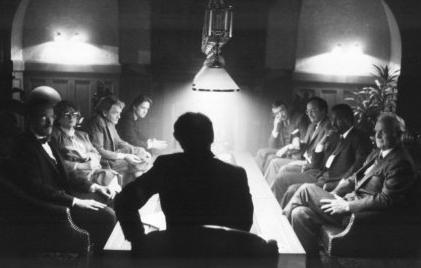
We started the course today with a look at the film, The Star Chamber, which deals with Judge Hardin (Michael Douglas) as an idealistic Los Angeles judge who is frustrated when the technicalities of the law prevent the prosecution of two men who are accused of raping and killing a 10-year-old boy. Judge Hardin joins a modern-day "Star Chamber", group of judges who identify criminals who fell through the judicial system's cracks and then 'do something about them' by issuing appropriate sentences for the crimes committed.  All of this, of course, occurs behind closed doors in secret and outside the parameters of legalities in our modern-day society.


The term "Star Chamber" comes from an old English Court of Law that sat at the royal Palace of Westminster until 1641. It was made up of Privy Counselors as well as common law judges, and it supplemented the activities of the common-law and equity courts in both civil and criminal matters. The court was set up to ensure the fair enforcement of laws against prominent people, those so powerful that ordinary courts could never convict them of their crimes. Court sessions were held in secret, with no indictments, no right of appeal, no juries, and no witnesses. Evidence was presented in writing. Over time it evolved into a political weapon and became a symbol of the misuse and abuse of power by the English monarchy and courts.

It was mistakenly thought that in 1487 an act was passed which established a special "Court of Star Chamber" to deal with the nobles; however, the only legislation passed in that year in this context was to set up a tribunal to prevent the intimidation of juries and to stop "retaining", i.e. the keeping of private armies by persons of rank. It seems to have gone out of use by 1509 and it had no connection with the later Court of Star Chamber whose primary purpose was to hear political treason and libel cases.

In modern usage, legal or administrative bodies with strict, arbitrary rulings and secretive proceedings are sometimes called, metaphorically or poetically, Star Chambers. This is a pejorative (negative) term and intended to cast doubt on the legitimacy of the proceedings. The inherent lack of objectivity of any politically motivated charges has led to substantial reforms in English law in most jurisdictions since that time.

Clearly there are connections between the idea of the old Star Chamber of England and the depiction in the film of the administration of justice, or rather, because of what we call "legal technicalities", the lack of administration of justice, especially in serious criminal cases.